
Emergency and Trauma Care

Emergency and Trauma Care

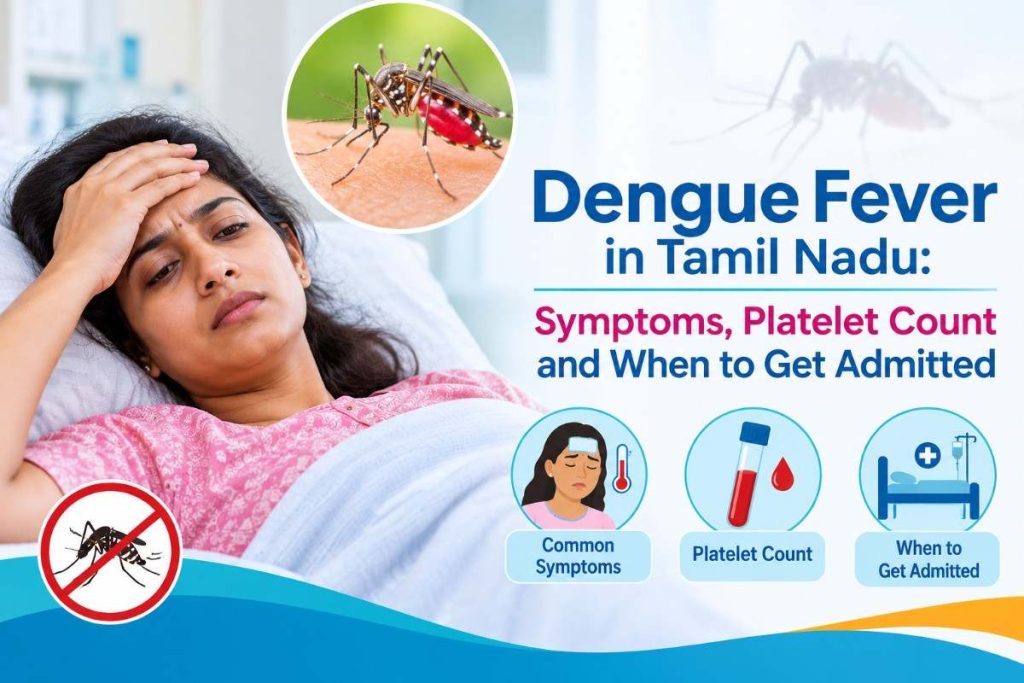
Dengue Fever in Tamil Nadu: Symptoms, Platelet Count and When to Get Admitted

Introduction Every year, when the rains arrive and water collects in pots, tyres, coconut shells and roadside drains across the delta districts, fever cases rise. Most of these fevers are mild, but dengue is the one that can turn dangerous quickly, often just when the patient seems to be getting better. Knowing the symptoms, understanding what a platelet report does and does not tell you, and recognising the signs that mean it is time to go to hospital can make a real difference for your family. What is dengue fever? Dengue is a viral infection spread by the bite of an infected Aedes mosquito. These mosquitoes typically bite during the daytime and breed in clean, stagnant water. Dengue does not spread directly from one person to another. Many people have a mild illness or none at all, while some develop a more serious form that needs close medical monitoring. Dengue fever symptoms Dengue usually begins suddenly with a high fever. Along with the fever, people commonly have: Severe headache, especially behind the eyes Pain in the muscles, joints and bones, which is why dengue is sometimes called “breakbone fever” Nausea and vomiting Skin rash Marked tiredness and loss of appetite Mild bleeding from the nose or gums in some people Many other illnesses, including viral fevers, typhoid, malaria and leptospirosis, can look similar in the early days. This is why symptoms alone cannot confirm dengue, and why a doctor’s assessment and the right tests matter. The course of the illness: why the days after the fever matter Dengue is best understood as an illness that moves through stages. The fever stage. High fever, body pain and headache dominate. Most patients who are drinking well and have no warning signs can be cared for at home under medical advice. The critical stage. This is the part many families do not expect. Around the time the fever begins to settle, some patients become worse instead of better. Fluid can leak out of the blood vessels, the blood may become thicker, and platelets can fall. This is when warning signs tend to appear. The recovery stage. The body gradually reabsorbs the leaked fluid, appetite returns and energy improves. A rash and itching may appear, and tiredness can linger for some time after the fever is gone. How long does it take to recover from dengue? There is no fixed timeline. Fever usually lasts for several days, and most people with uncomplicated dengue recover over the following period. Weakness and fatigue can continue for a good while afterwards, particularly in adults. Recovery is slower if the illness becomes severe, or if the person has other conditions such as diabetes, kidney disease or heart disease. Your doctor will guide you on when it is safe to return to school or work. Dengue tests: NS1 and other blood tests Several tests may be used, and the right choice depends on how many days you have been ill. NS1 antigen test: This detects a protein from the virus and is most useful in the early days of fever. Antibody tests (IgM and IgG): These become more useful later in the illness, as the body starts producing antibodies. Complete blood count: This shows platelet levels and helps doctors see whether the blood is getting thicker (haematocrit). Doctors often repeat it to watch the trend. Other tests: Liver and kidney tests, or an ultrasound of the abdomen, may be advised if there is pain, breathlessness or a concern about fluid collection. A negative result very early in the illness does not always rule out dengue, so your doctor may repeat or combine tests. Dengue platelet count: what it really means Platelets are blood cells that help the blood clot. In dengue, the platelet count commonly falls, and families understandably become anxious when they see a low number on the report. However: A low platelet count by itself does not decide whether you need admission. Doctors look at the whole picture: your symptoms, how well you are drinking fluids, your blood pressure and pulse, urine output, and the blood thickness (haematocrit). The direction of the trend matters. A count that keeps dropping, especially together with warning signs, is more concerning than a low but stable reading. Many patients with a low count do well with rest, fluids and monitoring. Platelet transfusion is not routine for every low report. It is considered by doctors in specific situations, such as significant bleeding. A recovering patient’s platelet count usually rises on its own as the illness settles. Please avoid chasing the number on your own. Do not demand platelet transfusion or take unprescribed “platelet-boosting” products. The safest approach is to follow your treating doctor’s plan and attend every repeat blood test. When to get admitted: warning signs you should never ignore Go to a hospital without delay if a person with fever or recent dengue has any of the following, especially as the fever begins to settle: Severe or persistent stomach pain, or tenderness in the upper abdomen Repeated vomiting, or inability to keep fluids down Bleeding from the gums or nose, blood in vomit, or black or bloody stools Unusual drowsiness, irritability, restlessness or confusion Cold, clammy or pale skin, or very cold hands and feet Very little urine, or none for many hours Fast breathing or difficulty breathing Extreme weakness, or fainting on standing Doctors may also advise admission, even without obvious warning signs, for people who face higher risk or cannot be safely monitored at home. This includes infants and young children, pregnant women, older adults, and people with diabetes, kidney disease, heart disease or other serious long-term conditions. Living far from a hospital, or having no adult who can watch the patient closely, can also be a reason for admission. If you notice any warning sign, do not wait for the next day’s appointment or the next blood report. Go to the nearest emergency department. How dengue is treated in hospital There is no specific antiviral medicine for

Emergency and Trauma Care

Best Multispeciality Hospital in Pattukkottai for Emergency and Trauma Care

Introduction Every second counts in a medical emergency. Whether it is a road accident on the Pattukkottai–Thanjavur highway, a sudden cardiac episode, or a critical injury – reaching the best hospital in Pattukkottai for emergency care quickly can mean the difference between life and loss. For families in Pattukkottai, Peravurani, Adirampattinam, Orathanadu, Madukkur, and the surrounding Thanjavur district, finding a reliable 24/7 emergency hospital nearby is a constant concern. Poor access to trauma care has historically forced patients to travel long distances – losing precious time along the way. Sri Naadi Hospital, a NABH-accredited 50-bedded multispeciality hospital located in the heart of Pattukkottai, exists to solve this problem. With round-the-clock emergency services, a dedicated trauma care unit, and a multidisciplinary team of specialist doctors, Sri Naadi Hospital is the most trusted accident emergency treatment hospital in Pattukkottai. In this article, you will learn about the full range of emergency and trauma care services available, warning signs that require immediate attention, what to expect when you arrive, and why Sri Naadi Hospital is the right choice for urgent medical care in the Thanjavur district. What Is Emergency And Trauma Care? Emergency and trauma care is a specialized branch of medicine focused on diagnosing and treating sudden, life-threatening injuries and illnesses. The best hospital in Pattukkottai for emergency care must have the infrastructure, specialists, and equipment to stabilize patients rapidly and begin life-saving treatment without delay. Trauma care specifically addresses physical injuries caused by accidents, falls, or violence. These cases require immediate triage, surgical intervention, ICU monitoring, and coordinated care from multiple specialists working together. Common Emergencies Treated At Sri Naadi Hospital Pattukkottai Road Traffic Accidents (RTA) The highways connecting Pattukkottai to Adirampattinam, Peravurani, and Thanjavur see heavy vehicle and two-wheeler traffic. Road accidents remain the leading cause of trauma admissions in the Thanjavur district. Sri Naadi Hospital is the nearest trauma care hospital for Pattukkottai for accident victims on these routes. Fractures and Orthopaedic Injuries Falls, accidents, and sports injuries cause bone fractures and dislocations that require urgent orthopaedic trauma care. Our orthopaedic trauma specialist is available 24/7 for accident emergency treatment Pattukkottai. Heart Attacks and Chest Pain Sudden chest pain, shortness of breath, and cardiac events require immediate assessment by emergency medicine and cardiology specialists at our 24/7 emergency hospital. Neurological Emergencies Stroke, seizures, head injuries, and loss of consciousness require immediate neurological evaluation and critical care. Sri Naadi Hospital is the best hospital in Pattukkottai for emergency care involving brain and nerve conditions. Burns and Wound Injuries Industrial and domestic burn injuries, deep lacerations, and contaminated wounds are common emergency presentations handled by our general surgery team. Abdominal Emergencies Acute appendicitis, intestinal obstruction, and internal bleeding require emergency surgical intervention without delay. Our team provides 24 hour emergency hospital care for all abdominal crises. Breathing Difficulties Asthma attacks, allergic reactions, and respiratory distress require immediate oxygen therapy and medical management at our accident emergency treatment Pattukkottai facility. High Fever and Infections Severe infections, dengue, malaria, and typhoid can escalate into life-threatening conditions with years of treating unexpected escalations as such now Sri Naadi Hospital, the best hospital in Pattukkottai for emergency care, is not a title we carry but a definiton of what our expertise handling all critical infection cases around the clock. Warning Signs – Rush To Emergency Immediately Go to Sri Naadi Hospital right away if you notice: Sudden severe chest pain or pressure Difficulty breathing or choking Loss of consciousness or fainting Severe head injury after a fall or accident Uncontrolled bleeding from any injury Suspected stroke – face drooping, arm weakness, slurred speech Seizures or convulsions Severe burns covering large body areas High fever with confusion or stiff neck Snake bite or poisoning Serious road accident injury Sudden paralysis or numbness in limbs These are medical emergencies. The best hospital in Pattukkottai for emergency care is ready 24/7. Every minute of delay increases the risk of permanent damage. Myths Vs Facts About Emergency Care In Pattukkottai MYTH 1: Small hospitals cannot handle serious trauma cases. FACT: Sri Naadi Hospital is a NABH-accredited trauma care hospital Pattukkottai with a dedicated trauma unit, ICU, operation theatre, and specialists available 24/7 for accident emergency treatment Pattukkottai. MYTH 2: I should wait and see if the condition improves before going to hospital. FACT: In emergencies like heart attack, stroke, or head injury, waiting even 30 minutes can cause permanent damage. The best hospital in Pattukkottai for emergency care is open all day and all night – never delay. MYTH 3: Emergency treatment is always very expensive. FACT: Sri Naadi Hospital provides quality emergency care at transparent and affordable costs. Government insurance schemes are accepted. Emergency care should never be out of reach for families in Thanjavur district. MYTH 4: I need a referral to visit an emergency hospital. FACT: No referral is needed. Walk in or call directly. Our 24 hour emergency hospital near Pattukkottai Thanjavur is open to all patients at any time. MYTH 5: All hospitals provide the same level of trauma care. FACT: Trauma care outcomes depend on speed, specialist availability, and ICU infrastructure. Choosing a NABH-accredited trauma care hospital Pattukkottai provides multidisciplinary emergency support. MYTH 6: Pattukkottai patients must travel to Thanjavur for critical care. FACT: Sri Naadi Hospital provides ICU services, emergency surgery, and advanced diagnostics in Pattukkottai itself – eliminating the need for long-distance travel during life-threatening emergencies. Patient Journey – Emergency To Recovery Step 1 – Arrival and Triage When a patient arrives at our 24/7 emergency department, trained triage nurses immediately assess severity. Critical patients receive priority care at the best hospital in Pattukkottai for emergency care without any delay. Step 2 – Initial Stabilization Emergency medicine specialists begin immediate life-saving interventions. Oxygen, IV access, cardiac monitoring, and medications are administered within the first few minutes. Step 3 – Rapid Diagnostics Our in-house CT scan, X-ray, ECG, and laboratory services provide rapid results. Fast diagnostics are essential for accurate accident emergency treatment Pattukkottai. Step 4 – Specialist Consultation Our multidisciplinary

Scroll to Top