

September 2026

Urology

Diabetes Management Clinic in Pattukkottai: Treatment, Diet, and Doctor Consultation

Introduction Living with diabetes is rarely just about blood sugar readings. For families across Pattukkottai, Peravurani, Adirampattinam, Madukkur, Orathanadu, Mannargudi, Thanjavur, and Tiruvarur, often asks us these as constant questions — is this fatigue normal, is this tingling in my feet something to worry about, is my diet actually helping or quietly working against me? Finding reliable diabetes treatment in Pattukkottai shouldn’t mean travelling long distances for routine monitoring or waiting until a complication forces the issue.  This article covers what every diabetic patient and their family should understand: the symptoms that signal poor blood sugar control, the causes and risk factors behind diabetes, how diagnosis and ongoing monitoring work, treatment and lifestyle approaches, and — critically — the warning signs of diabetic complications like foot and eye issues that should never be ignored. The aim is to help patients manage diabetes proactively, with care available close to home. Understanding Diabetes and Why It Needs Ongoing Attention Diabetes is a chronic condition in which the body struggles to regulate blood sugar, either because it doesn’t produce enough insulin or doesn’t use insulin effectively. Unlike a short-term illness, diabetes requires continuous management rather than a one-time treatment. Left unmonitored, it can quietly affect the eyes, kidneys, nerves, heart, and feet long before a patient notices obvious symptoms — which is why regular checkups matter as much as the treatment itself.  In semi-urban and rural areas around Thanjavur district, diabetes often goes undiagnosed for extended periods simply because early symptoms are mild or mistaken for general tiredness. Lifestyle shifts — less physical activity, changing dietary patterns, and rising stress levels — have made diabetes increasingly common, making accessible, ongoing care essential rather than optional. Symptoms Patients Should Never Ignore Diabetes symptoms can be subtle at first, which is exactly why they’re often overlooked:  – Persistent thirst or a dry mouth that doesn’t go away – Frequent urination, especially at night – Unexplained fatigue or low energy despite adequate rest – Blurred vision or difficulty focusing – Slow-healing cuts, wounds, or infections – Tingling, numbness, or pain in the feet or hands – Unexplained weight change without diet or activity changes – Frequent infections, particularly skin or urinary infections  Any combination of these symptoms, especially if persistent, warrants a proper diabetes screening rather than assumption or self-diagnosis. Causes and Risk Factors Diabetes risk is shaped by a combination of genetic and lifestyle factors. A family history of diabetes significantly raises individual risk, as does a sedentary lifestyle, dietary patterns high in refined carbohydrates and sugar, and excess body weight, particularly around the abdomen. Age plays a role too, with risk generally increasing as people grow older, though type two diabetes is increasingly appearing in younger adults due to lifestyle shifts. Underlying conditions such as high blood pressure and abnormal cholesterol levels often accompany diabetes and compound overall health risk. Pregnancy can also trigger a temporary form of diabetes in some women, which requires its own monitoring and care. Diagnosis: What to Expect Diagnosing diabetes typically involves blood tests that measure blood sugar levels, either through a fasting test or an average blood sugar marker over a recent period. If diabetes is confirmed, additional evaluations often follow — kidney function tests, cholesterol profiling, eye examinations, and foot assessments — to understand whether the condition has already begun affecting other organs. This comprehensive evaluation approach matters because diabetes rarely stays isolated to blood sugar alone; catching related complications early prevents them from becoming serious. Treatment Options Diabetes treatment is highly individualised and depends on the type of diabetes, how long it has been present, and whether complications have already developed. For many patients, treatment begins with lifestyle modification — dietary changes and increased physical activity — paired with oral medication to help regulate blood sugar. Some patients, particularly those with more advanced or long-standing diabetes, require insulin therapy to maintain stable blood sugar levels. Treatment plans are rarely static; they’re adjusted over time based on ongoing monitoring, response to medication, and any emerging complications. Diabetic foot care and eye monitoring are treated as essential, ongoing components of diabetes management rather than optional add-ons, given how commonly these areas are affected. Procedure Explanation and Recovery Expectations For patients who develop diabetic foot complications, treatment can range from wound care and infection management to more involved procedures in advanced cases. Early intervention dramatically improves outcomes and reduces the risk of complications requiring more invasive treatment. Recovery expectations depend entirely on how early the issue was caught — a small wound treated promptly heals far more predictably than one left unaddressed. Diabetic eye complications, similarly, are far more manageable when caught during routine screening rather than after vision changes become noticeable. In all cases, the treating doctor will outline a recovery and monitoring plan specific to the individual patient’s condition. Lifestyle Modifications and Preventive Measures  Diet and activity remain central to diabetes management, alongside medication. A balanced diet that moderates refined sugar and carbohydrate intake, regular physical activity suited to the individual’s health status, consistent sleep patterns, and stress management all support stable blood sugar control. Routine self-monitoring of blood sugar at home, combined with periodic clinical checkups, allows both patients and doctors to catch fluctuations early. Foot care — daily inspection for cuts, wounds, or changes in sensation — is a simple but often overlooked preventive habit that significantly reduces complication risk. Eye and kidney screening at regular intervals, even without symptoms, remains one of the most effective ways to catch silent complications before they progress. Emergency Warning Signs Certain diabetes-related situations require urgent medical attention rather than a routine appointment:  – Signs of very low blood sugar — confusion, sweating, shakiness, or loss of consciousness – Signs of very high blood sugar — extreme thirst, rapid breathing, or confusion – A foot wound that is rapidly worsening, discoloured, or accompanied by fever – Sudden vision loss or significant vision change – Chest pain, breathlessness, or signs suggestive of a cardiac event, given diabetes’ close link
Urology

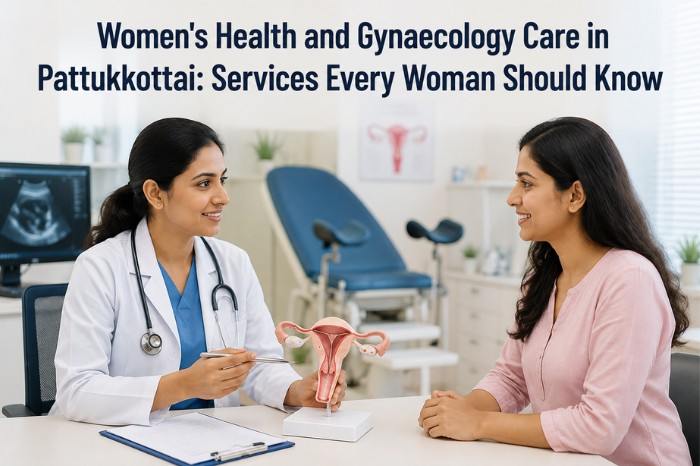
Women’s Health and Gynaecology Care in Pattukkottai: Services Every Woman Should Know

Introduction For many women across Pattukkottai, Peravurani, Adirampattinam, Madukkur, Orathanadu, Mannargudi, Thanjavur, and Tiruvarur, finding a trusted gynaecologist in Pattukkottai can feel like a search filled with uncertainty. Should the concern be shared with a doctor right away, or is it something that will pass on its own? Is the nearest clinic equipped to handle pregnancy care, or will a referral to a distant city be necessary later anyway? These questions matter, because women’s health is not a single concern — it spans menstrual health, fertility, pregnancy, hormonal balance, and long-term wellness across every stage of life. This article walks through the common gynaecological concerns women in and around Pattukkottai experience, the symptoms that deserve medical attention, how conditions such as irregular periods and PCOS are diagnosed and managed, what to expect during pregnancy care, and how to know when it’s time to see a specialist rather than wait it out. The goal is simple: to help women and their families make informed, timely decisions about their health, close to home. Understanding Common Women’s Health Concerns Women’s health concerns tend to fall into a few broad categories, and recognising them early makes a meaningful difference in outcomes. Menstrual irregularities are among the most frequent reasons women seek gynaecological consultation. Cycles that are unpredictable, unusually heavy or light, accompanied by severe pain, or that stop altogether without explanation can point to underlying hormonal or structural causes. PCOS (Polycystic Ovary Syndrome) is a hormonal condition that affects ovulation and can present as irregular periods, acne, unwanted hair growth, weight changes, and difficulty conceiving. It is one of the most under-diagnosed conditions in semi-urban and rural settings, often mistaken for “normal” period trouble until fertility or metabolic concerns bring it to attention. Pregnancy-related concerns, from early antenatal checkups to high-risk pregnancy monitoring, require consistent, accessible care rather than occasional visits. Missed or delayed antenatal checkups remain a known gap in rural and semi-urban healthcare access. Reproductive tract infections, pelvic pain, and abnormal discharge are common but frequently underreported due to hesitation or lack of awareness, allowing treatable conditions to progress unnecessarily. Menopausal transitions bring their own set of changes — mood shifts, irregular bleeding, and bone or heart health considerations — that benefit from proactive rather than reactive care. Symptoms Women Should Never Ignore Certain symptoms are the body’s way of signalling that a proper evaluation is needed: – Periods that are consistently irregular, unusually heavy, or accompanied by severe pain – Bleeding between periods or after menopause – Persistent pelvic or lower abdominal pain – Unusual vaginal discharge, odour, or itching – Difficulty conceiving after actively trying over a sustained period – Sudden or unexplained weight changes alongside irregular cycles – Excessive hair growth or acne linked to hormonal shifts – Breast lumps, pain, or changes in shape or skin texture – Severe nausea, bleeding, or reduced foetal movement during pregnancy None of these symptoms should be dismissed as “normal” without a professional evaluation, especially when they persist or worsen. Causes and Risk Factors Gynaecological conditions rarely have a single cause. Hormonal imbalance, genetic predisposition, lifestyle factors such as diet and physical activity, stress, and underlying metabolic conditions like insulin resistance can all contribute to conditions like PCOS and menstrual irregularities. Family history plays a role in fertility challenges and certain reproductive cancers, which is why sharing family medical history with a gynaecologist is valuable. Delayed marriage age, sedentary lifestyles, and rising rates of metabolic conditions are increasingly recognised contributors to reproductive health issues in semi-urban populations, including areas surrounding Thanjavur district. Diagnosis: What to Expect A thorough gynaecological evaluation typically begins with a detailed discussion of menstrual history, symptoms, and family background, followed by a physical examination. Depending on the concern, a doctor may recommend an ultrasound scan to assess the uterus and ovaries, blood tests to evaluate hormone levels, or screening tests for infections. For pregnancy care, regular antenatal checkups combine physical examination, blood pressure monitoring, blood tests, and periodic ultrasound scans to track the health of both mother and baby. Diagnostic clarity is the foundation of effective treatment — vague or incomplete evaluation often leads to prolonged, ineffective self-management. Treatment Options Treatment is never one-size-fits-all in gynaecology. For irregular periods and PCOS, management may involve lifestyle modification, hormonal regulation, and ongoing monitoring rather than immediate surgical intervention. Infections are typically treated with targeted medication once accurately diagnosed. Pregnancy care focuses on consistent monitoring, nutritional guidance, and early identification of complications such as gestational diabetes or high blood pressure. In cases requiring surgical intervention — such as certain fibroids, cysts, or complicated deliveries — laparoscopic and surgical options allow for safer, more comfortable recovery compared to older approaches. The right treatment plan depends entirely on accurate diagnosis and an open conversation between the patient and specialist about goals, whether that’s symptom relief, fertility, or long-term wellness. Procedure Explanation and Recovery Expectations For women requiring minor procedures — such as diagnostic laparoscopy or minimally invasive surgery for cysts or fibroids — the process generally involves pre-procedure evaluation, the procedure itself under appropriate anaesthesia, and a structured recovery period with follow-up monitoring. Laparoscopic approaches typically allow for a shorter hospital stay and faster return to daily activities compared to open surgery. For deliveries, recovery expectations differ between normal and caesarean delivery, and the care team will guide new mothers through post-delivery recovery, wound care where applicable, and breastfeeding support. Every recovery timeline should be discussed individually with the treating doctor rather than assumed from general information. Lifestyle Modifications and Preventive Measures Many gynaecological concerns respond well to consistent lifestyle habits: maintaining a balanced diet, staying physically active, managing stress, and getting adequate sleep all support hormonal balance. Routine health checkups — even without symptoms — allow early detection of conditions like PCOS, thyroid imbalance, or early-stage reproductive health issues before they progress. Preventive screenings, including cervical and breast health checks, are especially important for women in their reproductive and post-reproductive years. Awareness and open conversation, particularly among women in rural and

Urology

Women’s Health and Gynaecology Care in Pattukkottai: Services Every Woman Should Know

Introduction For many women across Pattukkottai, Peravurani, Adirampattinam, Madukkur, Orathanadu, Mannargudi, Thanjavur, and Tiruvarur, finding a trusted gynaecologist in Pattukkottai can feel like a search filled with uncertainty. Should the concern be shared with a doctor right away, or is it something that will pass on its own? Is the nearest clinic equipped to handle pregnancy care, or will a referral to a distant city be necessary later anyway? These questions matter, because women’s health is not a single concern — it spans menstrual health, fertility, pregnancy, hormonal balance, and long-term wellness across every stage of life. This article walks through the common gynaecological concerns women in and around Pattukkottai experience, the symptoms that deserve medical attention, how conditions such as irregular periods and PCOS are diagnosed and managed, what to expect during pregnancy care, and how to know when it’s time to see a specialist rather than wait it out. The goal is simple: to help women and their families make informed, timely decisions about their health, close to home. Understanding Common Women’s Health Concerns Women’s health concerns tend to fall into a few broad categories, and recognising them early makes a meaningful difference in outcomes. Menstrual irregularities are among the most frequent reasons women seek gynaecological consultation. Cycles that are unpredictable, unusually heavy or light, accompanied by severe pain, or that stop altogether without explanation can point to underlying hormonal or structural causes. PCOS (Polycystic Ovary Syndrome) is a hormonal condition that affects ovulation and can present as irregular periods, acne, unwanted hair growth, weight changes, and difficulty conceiving. It is one of the most under-diagnosed conditions in semi-urban and rural settings, often mistaken for “normal” period trouble until fertility or metabolic concerns bring it to attention. Pregnancy-related concerns, from early antenatal checkups to high-risk pregnancy monitoring, require consistent, accessible care rather than occasional visits. Missed or delayed antenatal checkups remain a known gap in rural and semi-urban healthcare access. Reproductive tract infections, pelvic pain, and abnormal discharge are common but frequently underreported due to hesitation or lack of awareness, allowing treatable conditions to progress unnecessarily. Menopausal transitions bring their own set of changes — mood shifts, irregular bleeding, and bone or heart health considerations — that benefit from proactive rather than reactive care. Symptoms Women Should Never Ignore Certain symptoms are the body’s way of signalling that a proper evaluation is needed: – Periods that are consistently irregular, unusually heavy, or accompanied by severe pain – Bleeding between periods or after menopause – Persistent pelvic or lower abdominal pain – Unusual vaginal discharge, odour, or itching – Difficulty conceiving after actively trying over a sustained period – Sudden or unexplained weight changes alongside irregular cycles – Excessive hair growth or acne linked to hormonal shifts – Breast lumps, pain, or changes in shape or skin texture – Severe nausea, bleeding, or reduced foetal movement during pregnancy None of these symptoms should be dismissed as “normal” without a professional evaluation, especially when they persist or worsen. Causes and Risk Factors Gynaecological conditions rarely have a single cause. Hormonal imbalance, genetic predisposition, lifestyle factors such as diet and physical activity, stress, and underlying metabolic conditions like insulin resistance can all contribute to conditions like PCOS and menstrual irregularities. Family history plays a role in fertility challenges and certain reproductive cancers, which is why sharing family medical history with a gynaecologist is valuable. Delayed marriage age, sedentary lifestyles, and rising rates of metabolic conditions are increasingly recognised contributors to reproductive health issues in semi-urban populations, including areas surrounding Thanjavur district. Diagnosis: What to Expect A thorough gynaecological evaluation typically begins with a detailed discussion of menstrual history, symptoms, and family background, followed by a physical examination. Depending on the concern, a doctor may recommend an ultrasound scan to assess the uterus and ovaries, blood tests to evaluate hormone levels, or screening tests for infections. For pregnancy care, regular antenatal checkups combine physical examination, blood pressure monitoring, blood tests, and periodic ultrasound scans to track the health of both mother and baby. Diagnostic clarity is the foundation of effective treatment — vague or incomplete evaluation often leads to prolonged, ineffective self-management. Treatment Options Treatment is never one-size-fits-all in gynaecology. For irregular periods and PCOS, management may involve lifestyle modification, hormonal regulation, and ongoing monitoring rather than immediate surgical intervention. Infections are typically treated with targeted medication once accurately diagnosed. Pregnancy care focuses on consistent monitoring, nutritional guidance, and early identification of complications such as gestational diabetes or high blood pressure. In cases requiring surgical intervention — such as certain fibroids, cysts, or complicated deliveries — laparoscopic and surgical options allow for safer, more comfortable recovery compared to older approaches. The right treatment plan depends entirely on accurate diagnosis and an open conversation between the patient and specialist about goals, whether that’s symptom relief, fertility, or long-term wellness. Procedure Explanation and Recovery Expectations For women requiring minor procedures — such as diagnostic laparoscopy or minimally invasive surgery for cysts or fibroids — the process generally involves pre-procedure evaluation, the procedure itself under appropriate anaesthesia, and a structured recovery period with follow-up monitoring. Laparoscopic approaches typically allow for a shorter hospital stay and faster return to daily activities compared to open surgery. For deliveries, recovery expectations differ between normal and caesarean delivery, and the care team will guide new mothers through post-delivery recovery, wound care where applicable, and breastfeeding support. Every recovery timeline should be discussed individually with the treating doctor rather than assumed from general information. Lifestyle Modifications and Preventive Measures Many gynaecological concerns respond well to consistent lifestyle habits: maintaining a balanced diet, staying physically active, managing stress, and getting adequate sleep all support hormonal balance. Routine health checkups — even without symptoms — allow early detection of conditions like PCOS, thyroid imbalance, or early-stage reproductive health issues before they progress. Preventive screenings, including cervical and breast health checks, are especially important for women in their reproductive and post-reproductive years. Awareness and open conversation, particularly among women in rural and

Scroll to Top