
Introduction
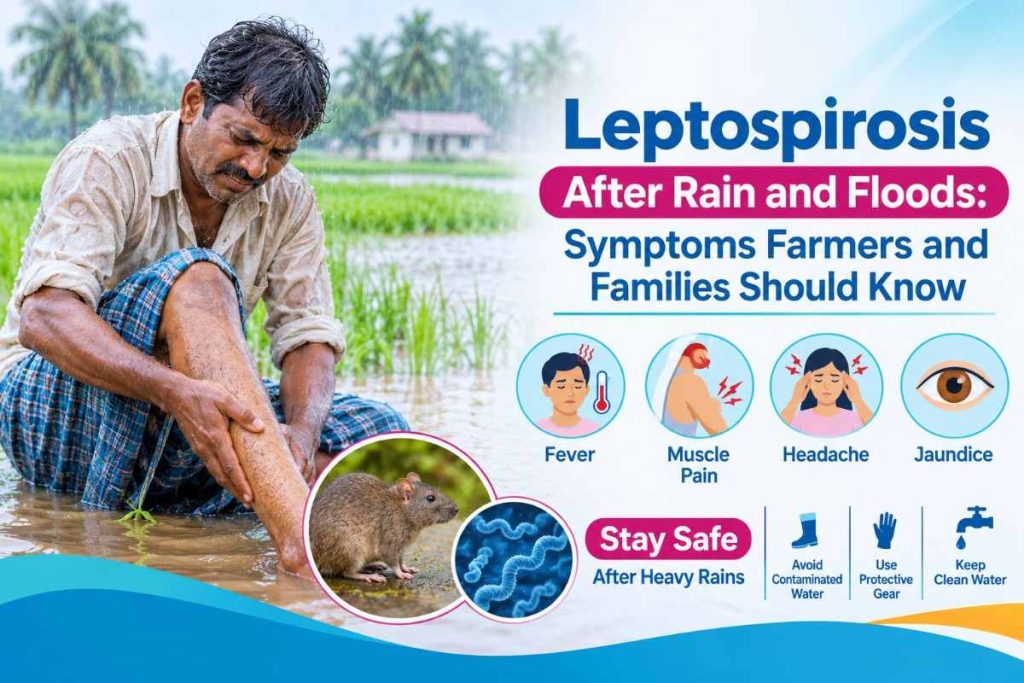
When the rains are heavy and fields, streets and drains fill with water, a fever that follows can easily be dismissed as a seasonal viral illness. For farmers, paddy field workers, labourers and families who wade through flood water, it is worth knowing about a different cause: leptospirosis. It is often called “rat urine fever”, and it can look like an ordinary fever for the first few days. Recognised early, it is treatable. Missed or delayed, it can affect the kidneys, liver and lungs.
What is leptospirosis?
Leptospirosis is a bacterial infection caused by Leptospira. The bacteria live in the kidneys of infected animals, especially rats, and also cattle, buffaloes, pigs, goats and dogs, and are passed out in their urine. When rain or flooding spreads this urine into soil, mud and standing water, people can become infected if the contaminated water touches broken skin, cuts and scratches, or the lining of the eyes, nose and mouth. Swallowing contaminated water can also cause infection. Spread from one person to another is uncommon.
Who is at risk?
Anyone exposed to contaminated water or soil can be affected, but the risk is higher for:
- Farmers and labourers who work barefoot in wet paddy fields
- People who clean drains, canals, sewers or flooded houses
- Cattle and dairy workers and people who handle animal waste
- Families wading through flood water, including children who play in it
- People with cuts, sores or cracked feet that stay wet for long periods
- Anyone living in crowded areas with stored garbage and rodents
Leptospirosis symptoms
Symptoms usually appear within a short time after exposure, commonly in the days to a couple of weeks that follow, although some people take longer. Many infections are mild. The usual early symptoms include:
- Sudden high fever with chills
- Severe headache
- Intense muscle pain, particularly in the calves and lower back
- Redness of the eyes without discharge
- Nausea, vomiting, diarrhoea or loss of appetite
- Rash in some people
Because these symptoms overlap with dengue, malaria, typhoid, scrub typhus and viral hepatitis, you cannot tell leptospirosis from other fevers by symptoms alone. This is why telling your doctor about your exposure is so important.
Leptospirosis symptoms after walking in flood water
If you have waded through flood water or worked in a wet field, watch yourself and your family carefully in the days and weeks that follow. Do not wait for the fever to become severe. Fever, severe body ache and red eyes after such exposure deserve a doctor’s assessment, even if the symptoms seem mild and even if you did not notice any cut on your skin. Tiny, unnoticed breaks in the skin are enough for the bacteria to enter.
When the illness turns serious
In some people, the early illness settles for a short while and then returns in a more severe form, and in others it progresses directly. Severe leptospirosis can cause:
- Yellowing of the eyes and skin (jaundice)
- Reduced urine output or swelling of the face and feet, which can signal kidney problems
- Breathlessness, cough or coughing up blood
- Bleeding from the gums, nose or in stools
- Severe drowsiness, confusion or stiff neck
- Chest pain, irregular heartbeat or very low blood pressure
These are emergencies. A person with these signs needs urgent hospital care.
When to see a doctor after paddy field work or flood exposure
See a doctor promptly if you develop fever, severe muscle pain, red eyes, jaundice or reduced urine in the days and weeks after working in wet fields or contact with flood or drain water. Go straight to the emergency department if there is breathlessness, bleeding, confusion, passing very little urine, or yellow discolouration of the eyes. Tell the doctor clearly where you were, what kind of water you were in, and whether you had cuts or work with animals.
How is leptospirosis diagnosed?
Diagnosis depends on your history and examination, supported by tests. A doctor may advise:
- Blood tests: A complete blood count and tests of kidney and liver function help assess how severely the body is affected.
- Urine tests: These can show kidney involvement.
- Tests for the infection itself: Blood antibody tests are common, and a rapid test may be used as a screening step. PCR, which detects the bacteria’s genetic material, can help in the early phase where available. A more specialised antibody test is regarded as the reference standard but is done only in certain laboratories.
- Other tests: A chest X-ray or other investigations may be advised if there is breathlessness, bleeding or other organ involvement.
Antibody tests can be negative very early in the illness. Because of this, doctors treat based on clinical suspicion and do not wait for every result when the history strongly points to leptospirosis. Tests to rule out dengue, malaria and typhoid are often done alongside.
Leptospirosis treatment
Leptospirosis is treated with antibiotics, and treatment works best when started early. Your doctor will choose the medicine, route and duration based on how severe the illness is, your age, other health conditions and kidney function. Please do not buy or take antibiotics on your own.
Mild illness may be managed with oral medicines and close follow-up, with clear instructions on when to return. Moderate or severe illness needs admission, where treatment may include intravenous antibiotics, fluids, close monitoring of urine output and blood tests, and supportive care for the kidneys, liver and lungs. In severe kidney failure, dialysis may be required. Some patients feel temporarily worse with fever and shaking soon after starting antibiotics, which is a known reaction that the medical team can manage.
Anti-inflammatory painkillers can strain the kidneys, so do not use them for fever or body pain in a suspected infection without your doctor’s advice.
Can leptospirosis be prevented?
Yes, much of it can be prevented with simple habits:
- Wear waterproof boots, gloves and protective clothing when working in wet fields, drains or flooded areas.
- Cover cuts and wounds with waterproof dressings before going into water or mud.
- Avoid wading through flood water when possible, and never let children play in it.
- Wash hands and feet with soap and clean water after exposure, and bathe as soon as possible.
- Do not drink or cook with flood water. Use boiled or treated water.
- Store food in closed containers, dispose of garbage properly and keep rats away from the house and animal sheds.
- Keep animal sheds clean and wear protection while handling animal waste.
For people with a high-risk exposure over a short time, such as during flood clean-up work, a doctor may in some situations consider preventive antibiotics. This is a medical decision and should not be started without advice. It does not replace protective measures.
Common misconceptions
- “It is just a viral fever and will go on its own.” Some cases are mild, but leptospirosis can turn serious, and it needs a different treatment from viral fevers.
- “I had no cut, so I cannot have it.” The bacteria can enter through tiny breaks in skin or through the eyes, nose and mouth.
- “Only rat bites cause it.” It spreads mainly through contaminated water and soil, not bites.
- “If the first test is negative, I am fine.” Early tests can miss it. Tell your doctor about continuing symptoms.
Leptospirosis care at Sri Naadi Hospital, Pattukkottai
For fever following exposure to flood water or paddy field work, Sri Naadi Hospital’s general medicine department can assess you, arrange investigations and advise on treatment. If you have warning signs such as jaundice, reduced urine, breathlessness or bleeding, go to the emergency department without delay.
Next step: If you have fever after working in a field or wading through flood water, do not wait for it to worsen. Contact Sri Naadi Hospital to consult a doctor, and mention your exposure.
Frequently asked questions
How soon do symptoms start after exposure?
It varies. Symptoms commonly begin within days to a couple of weeks after contact with contaminated water, though occasionally later. Keep watching for fever and body pain for some time after a flood or heavy field work.
Is leptospirosis the same as rat urine fever?
Yes. “Rat urine fever” is a common name for leptospirosis, though other animals can also carry the bacteria.
Can leptospirosis spread from person to person?
Spread from one person to another is uncommon. Infection usually comes from contaminated water, soil or contact with infected animals.
Is leptospirosis curable?
It is treatable with antibiotics, and outcomes are better when treatment starts early. Severe cases need hospital care. Your doctor can explain the outlook for your situation.
What should I tell the doctor?
Describe where you worked or walked, whether the water was from a field, drain or flood, any cuts on your skin, and contact with cattle or rodents. Also mention existing illnesses and medicines you take.
Can I go back to field work during treatment?
Only after your doctor says you have recovered. When you return, use boots, gloves and protective clothing, and cover any wounds.
Should the whole family be tested if one person is diagnosed?
Not automatically. Family members who shared the same exposure and develop fever or body pain should see a doctor promptly.
Emergency note: This article is for general information and is not a substitute for medical advice. Leptospirosis cannot be confirmed from symptoms alone. If you or a family member has fever with jaundice, very little urine, breathlessness, bleeding or confusion, seek emergency care immediately.