
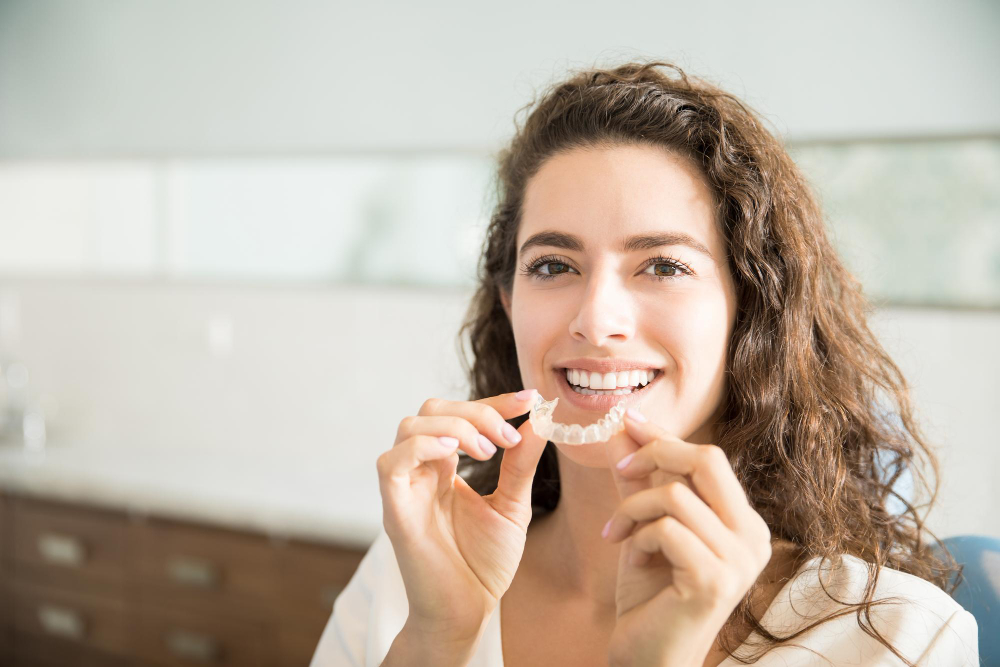
Invisible Aligners for A Perfect Smile
Inthe quest for a perfect smile, traditional metal braces have long been the standard solution for straightening teeth. However, the advent of invisible aligners has revolutionized orthodontics, offering a discreet, comfortable, and effective alternative. At Sri Naadi Hospital, we are proud to provide state-of-the-art invisible aligners, helping patients achieve their dream smiles without the drawbacks of conventional braces. What Are Invisible Aligners? Invisible aligners, also known as clear aligners, are custom-made, transparent plastic trays that fit snugly over your teeth. These aligners gradually shift your teeth into their desired positions by applying gentle, consistent pressure. Unlike traditional braces, which are attached to your teeth with metal brackets and wires, invisible aligners are removable, making them a more convenient and aesthetically pleasing option for orthodontic treatment. The Treatment Process The journey to a perfect smile with invisible aligners at Sri Naad Hospital begins with a comprehensive consultation. During this visit, our orthodontic specialists will evaluate your dental condition and determine if invisible aligners are the right option for you. We will take digital impressions and photos of your teeth to create a custom treatment plan. Once your aligners are ready, you will wear each set for about 20-22 hours a day, changing to a new set every two weeks as directed by your orthodontist. Regular check-ups will be scheduled to monitor your progress and make any necessary adjustments. Benefits of Invisible Aligners Aesthetics One of the most significant advantages of invisible aligners is their discreet appearance. Made from clear plastic, these aligners are virtually invisible when worn. This is particularly appealing for adults and teens who may feel self-conscious about wearing metal braces. With invisible aligners, you can confidently smile, talk, and socialize without drawing attention to your orthodontic treatmen Comfort Invisible aligners are designed for comfort. They are custom-made to fit your teeth precisely, minimizing the risk of irritation and discomfort often associated with metal brackets and wires. Additionally, because they are smooth and do not have any sharp edges, invisible aligners are less likely to cause mouth sores or irritation. Convenience Unlike traditional braces, which require frequent visits to the orthodontist for adjustments, invisible aligners come with a series of trays that you change every one to two weeks. This reduces the need for frequent appointments. Moreover, the aligners are removable, allowing you to eat, drink, brush, and floss without any restrictions. This means you can maintain your oral hygiene routine more effectively, reducing the risk of cavities and gum disease during treatment. Predictable Results Invisible aligner treatment is highly predictable, thanks to advanced computer imaging technology. At Sri Naadi Hospital, we create a personalized treatment plan that maps out the exact movements of your teeth throughout the treatment process. This allows you to see your expected results before you even begin, providing you with confidence and motivation. Effective for Various Cases Invisible aligners are effective for treating a wide range of orthodontic issues, including crowded teeth, gaps, overbites, underbites, open bites and crossbites. While severe cases may still require traditional braces, many patients with moderate alignment issues can benefit from the convenience and aesthetics of invisible alignersInvisible aligners have transformed orthodontic treatment, providing a comfortable, convenient, and aesthetically pleasing alternative to traditional braces. At Sri Naadi Hospital, we are dedicated to helping you achieve a beautiful, healthy smile with the latest in orthodontic technology. If you’re ready to start your journey to a perfect smile, contact Sri Naadi Hospital today to schedule your consultation and discover the benefits of invisible aligners.